Out-of-School Children
Reclaiming Futures
Giving working children the dignity and opportunity of education.
Reaching the Unreached: Who Are the Out-of-School Children?
In Bangladesh, an estimated 1.5 million primary-school-aged children remain out of the classroom. These vulnerable children are often invisible to formal social safety nets.
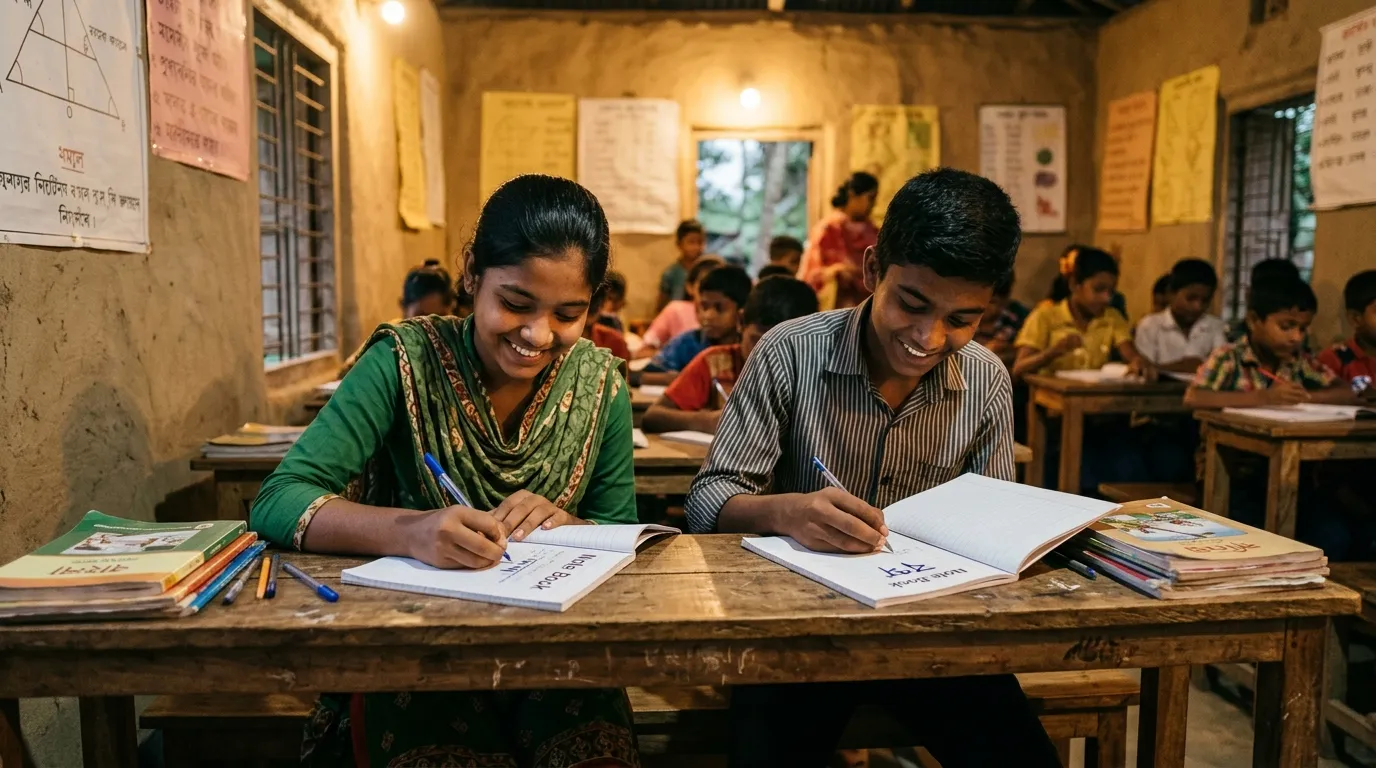
They are the children of day laborers, agricultural workers, domestic helpers, and migrants living in urban slums, remote coastal belt zones, hilly terrains, and river islands (chars). Many were forced to drop out before Grade 3 to contribute to household income, while others never enrolled due to distance, disability, or social exclusion.
"Ananda Schools exist to ensure that no child in Bangladesh is left behind simply because they were born into poverty or missed the traditional school age."
Overcoming Barriers
How Ananda Schools Address Dropout Drivers
By systematically identifying and dismantling the structural causes of educational exclusion, Ananda Schools create an inclusive learning highway.
Extreme Poverty & Child Labor
The Challenge: Families cannot afford tuition, uniforms, or books, and often rely on their children's modest earnings or domestic help for daily survival.
100% free schooling, free uniforms/books, plus cash stipends sent directly to parents' mobile phones based on attendance.
Remote & Disaster-Prone Zones
The Challenge: Formal primary schools are often located miles away across treacherous rivers, floodplains, or congested urban slums, making daily travel unsafe.
Community learning centers established directly inside the village or slum within a short, safe walking distance from students' homes.
Overage & Social Stigma
The Challenge: A 11-year-old who never went to school feels deeply intimidated and embarrassed sitting in a formal Grade 1 classroom with 6-year-olds.
Peer-grouped cohorts of children aged 8–14 learning together at an accelerated, joyful pace mentored by a supportive local female teacher.
Future Trajectories
Two Pathways to Lifelong Success
Ananda School is not an educational dead-end; it is a springboard. Upon completing the curriculum and appearing for terminal examinations, graduates transition into structured pathways that secure their economic and academic futures.
Pathway A: Mainstream Secondary Integration
Over 82% pass the National Primary Education Completion Exam (PECE) and seamlessly enroll in Grade 6 in local formal high schools.
Pathway B: Pre-Vocational Enterprise Certification
Older adolescents aged 15+ complete intensive 3 to 6-month technical training in trades like electronics, tailoring, and mobile repair, receiving startup toolkits.
How You Can Help
Whether you are an educator, researcher, CSR partner, or community volunteer, your collaboration can help us establish more Ananda learning centers across remote communities in Bangladesh.